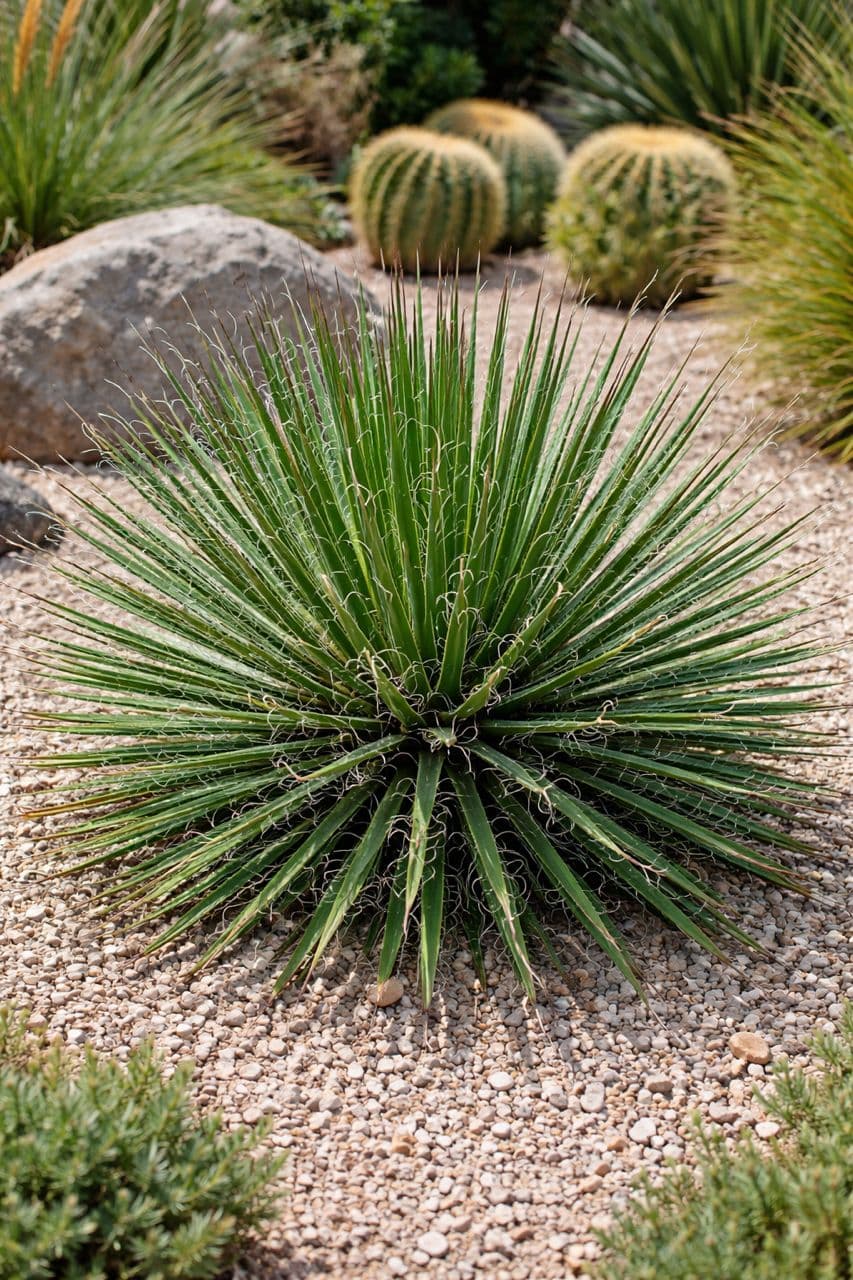
Twin-flowered Agave
Agave geminiflora
A striking evergreen succulent endemic to the Mexican state of Nayarit, native to elevations of 3,000–4,000 ft. Known for its dense, symmetrical rosette of hundreds of narrow, flexible dark green leaves with white fibrous hairs along the edges and sharp tips — resembling a sea urchin or fountain of needles. Unlike most agaves, its leaves are unarmed (no spines on edges). A monocarpic plant that blooms only once in its lifetime (after 10–15 years), sending up an unbranched flower spike of 8–15 feet bearing pairs of bright yellow flowers, then dies. Hardy to approximately 25°F (-4°C).
Size
Small to Medium — grows 2–3 ft tall and 2–3 ft wide at maturity
Light
Full sun to light shade. Best with morning sun and afternoon shade in hot inland climates. Thrives in full sun along the coast. Do not keep in deep shade.
Water
Very low water needs. Allow soil to dry out completely between deep, infrequent waterings. Water sparingly every 1–2 weeks during the growing season; keep almost completely dry in winter. Highly drought-tolerant once established. Overwatering is the most common cause of failure.
Care Guide
Light Requirements
Full sun to light shade. Best with morning sun and afternoon shade in hot inland climates. Thrives in full sun along the coast. Do not keep in deep shade.. A striking evergreen succulent endemic to the Mexican state of Nayarit, native to elevations of 3,000–4,000 ft.
Watering Routine
Very low water needs. Allow soil to dry out completely between deep, infrequent waterings. Water sparingly every 1–2 weeks during the growing season; keep almost completely dry in winter. Highly drought-tolerant once established. Overwatering is the most common cause of failure.. Consistent schedule recommended.
Need help with plant care?
Our maintenance packages ensure your plants stay healthy and beautiful year-round.
View Maintenance Services